MercyOne Des Moines says its TMS service is for adults with treatment-resistant major depressive disorder who have not responded satisfactorily to medication and therapy.
TMS information for adults with depression
According to MercyOne Des Moines, it offers repetitive transcranial magnetic stimulation, or TMS therapy, for adult patients with major depressive disorder who have not satisfactorily responded to traditional medication and therapy. The source describes treatment-resistant major depressive disorder as failure of four or more medication trials and an adequate psychotherapy trial, based on definitions used by most insurance companies.
MercyOne Des Moines describes TMS as an FDA-approved, non-drug depression treatment. The source says TMS uses an insulated magnetic coil held against the forehead to deliver electromagnetic pulses to brain areas involved in mood regulation. According to the source, the currents are intended to stimulate nerve cells in the targeted area.
What appointments may involve
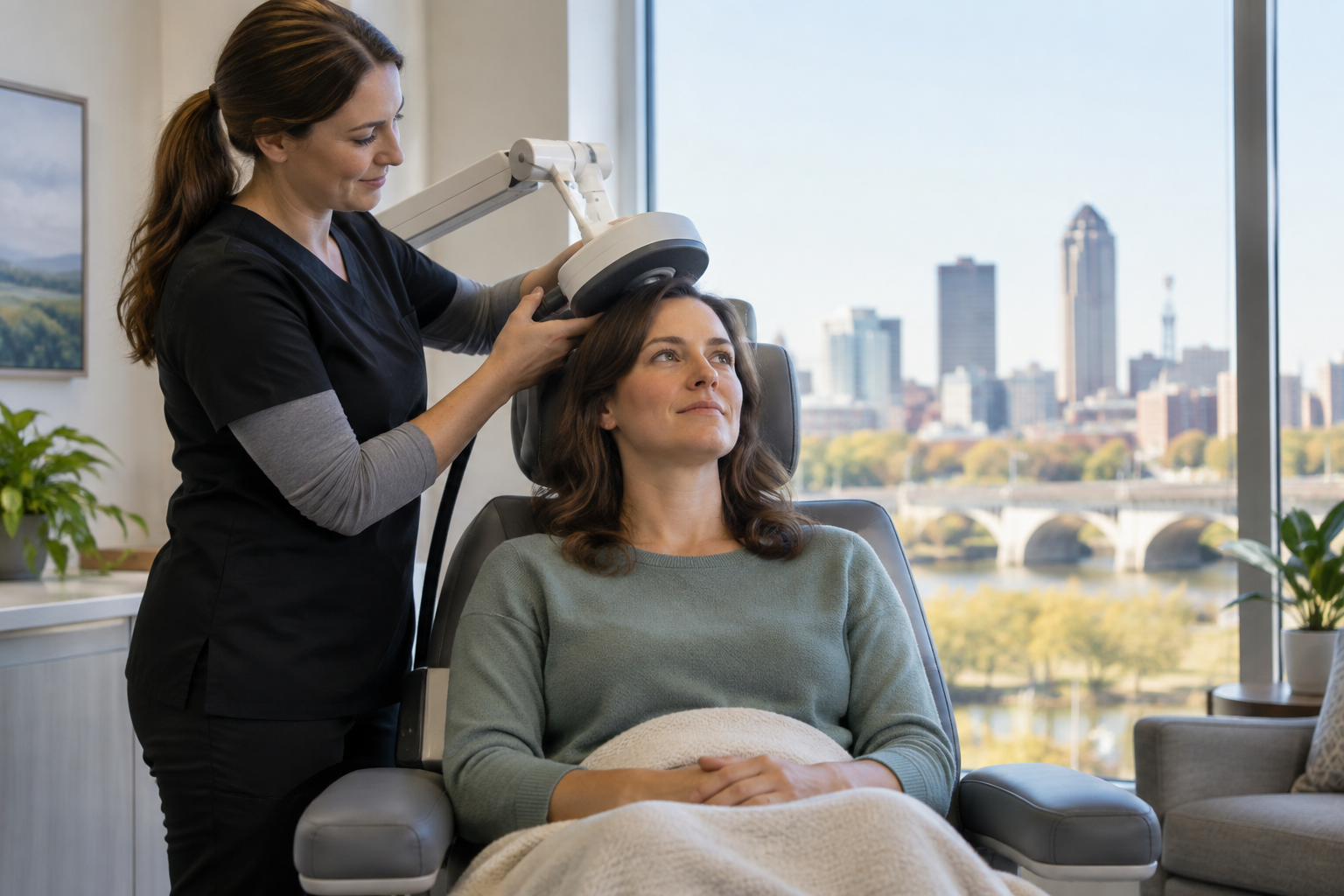
MercyOne Des Moines says patients recline in a chair and wear ear plugs during treatment. The source says a provider places an electromagnetic coil against the patient’s head, and patients may hear clicking sounds and feel tapping on the forehead when the machine is operating.
According to MercyOne Des Moines, patients remain awake and alert during treatment. The source says some people may experience scalp discomfort during a session and for a short period afterward. It also states that most patients return to normal daily activities, including work and driving, after treatment, while continuing appointments with their mental health provider.
Side effects and eligibility
MercyOne Des Moines lists headache, scalp discomfort or tingling, lightheadedness, and discomfort in the jaw or cheek on the treatment side as possible common side effects. The source lists seizures as a rare side effect and says they are more common among people with epilepsy, a history of seizures, or use of certain medicines that can trigger seizures.
The source says people should notify a doctor about worsening depression symptoms, signs or symptoms of suicidal behavior, or unusual behavior. MercyOne Des Moines also says TMS may not be suitable for people with a pacemaker, spinal or bladder stimulator, previous skull opening or head trauma, a history of epilepsy or seizure activity, or metallic foreign material in the chest or higher.
What this means for Iowa patients
For Iowans looking for treatment locally, the directory lists 34 published clinics in Iowa. MercyOne Des Moines provides contact information for people seeking more information about its TMS service.
This is general information, not medical advice.
More Iowa reporting on treatment updates.
This report is educational and is not medical advice. Coverage, availability and eligibility can change; verify details with the named source or your care team.